Straightforward CAD and engineering design for custom parts.
Currently taking on new projects
10-30 minutes to discuss your project by phone or video

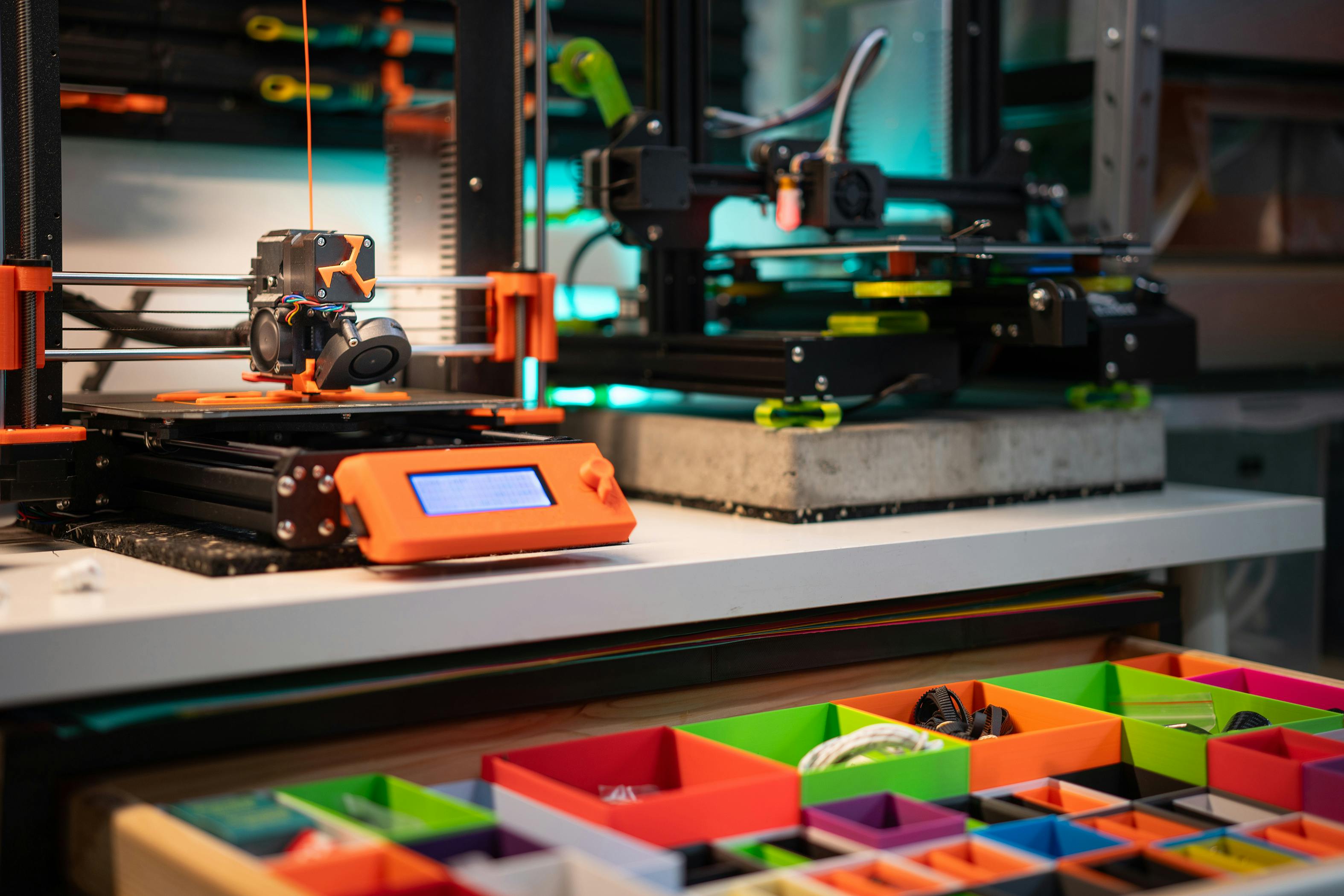

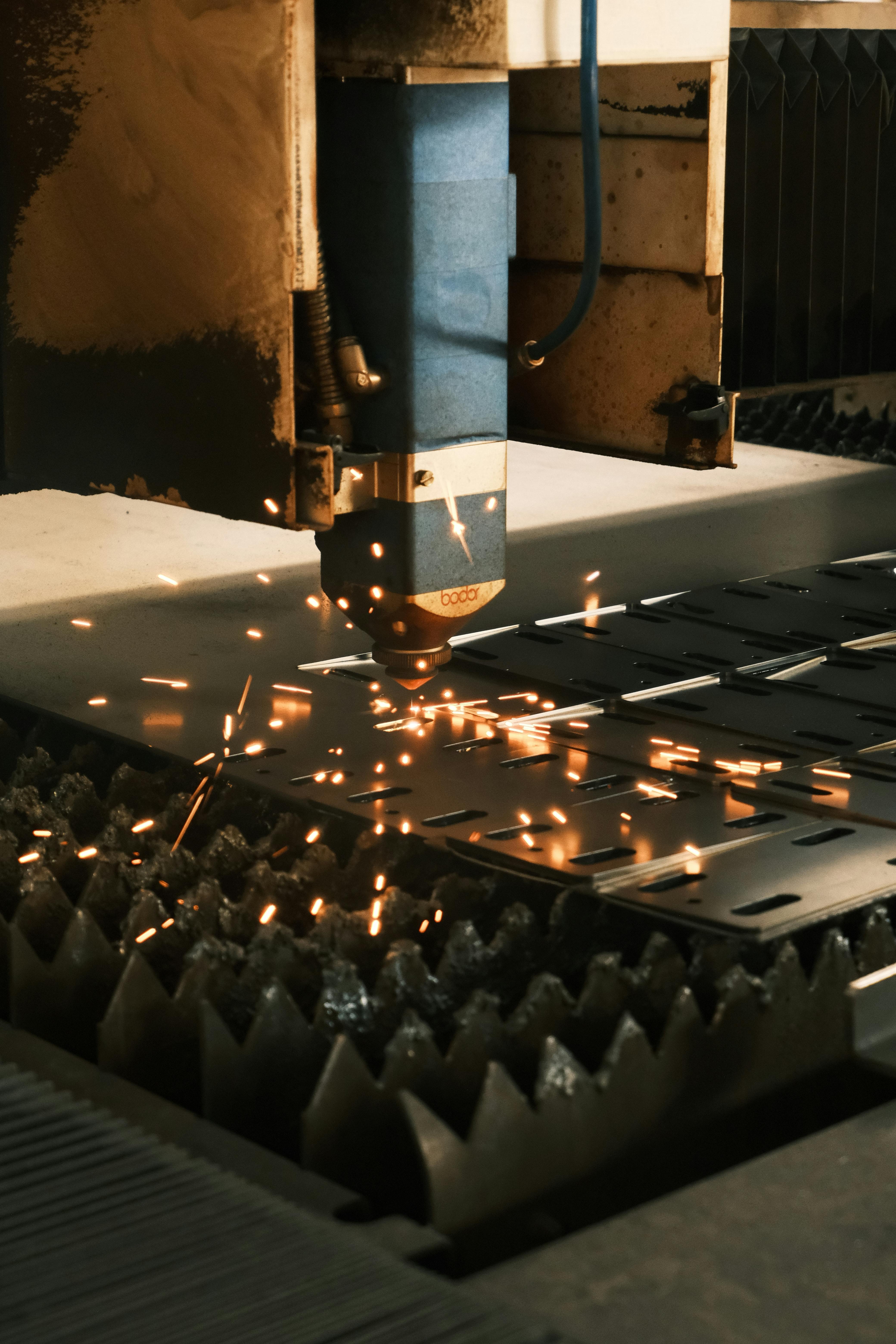
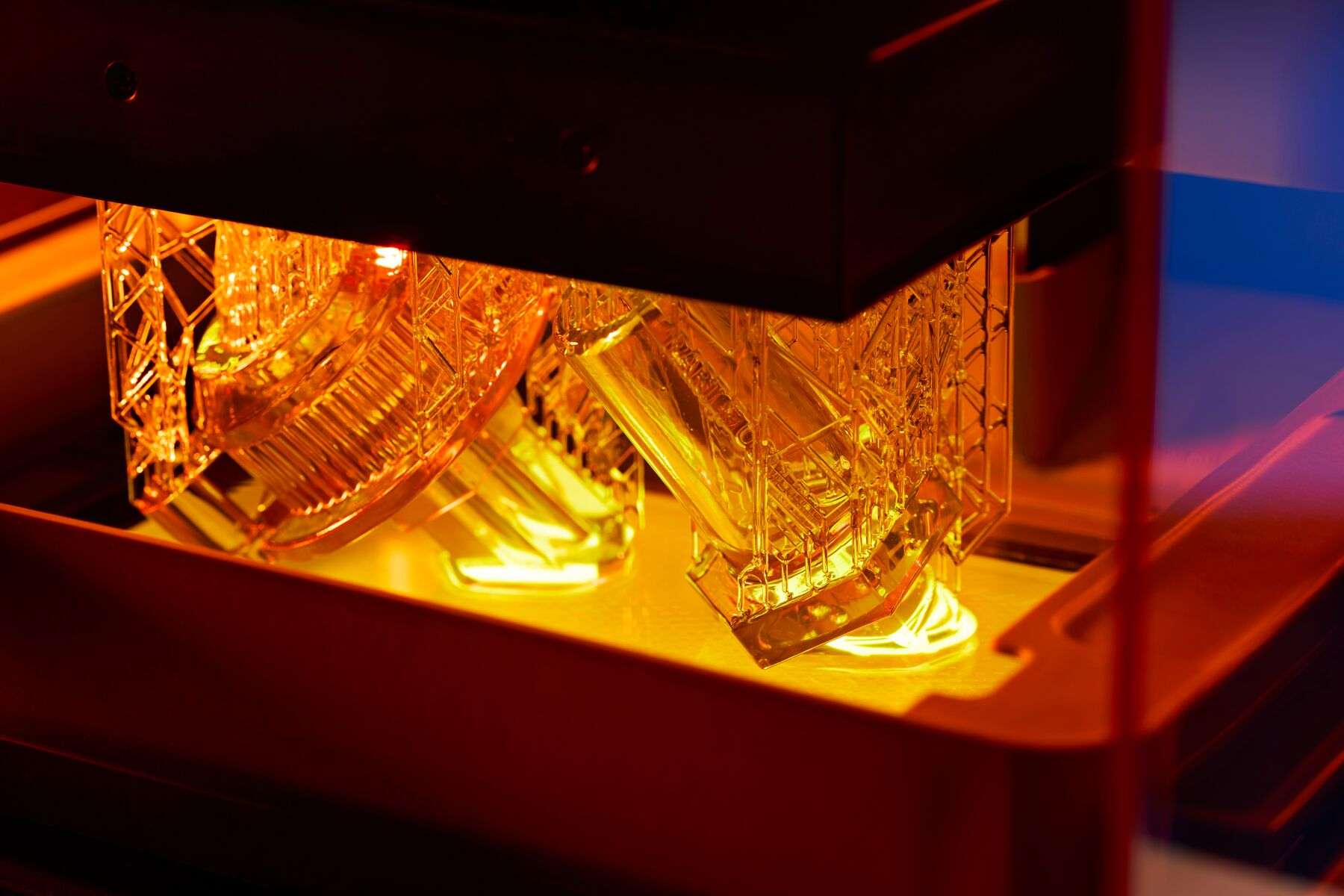

I’m Cameron Yartz, a mechanical engineer based in Orange County.
I help you transform your ideas into manufacturable, cost-effective solutions. As a Cal Poly grad with extensive hands-on manufacturing experience, I design with real-world constraints in mind—from materials and production methods to budgets and timelines.
Outside of work, I'm into off-roading and wrenching on my Jeep, playing drums, and building my own businesses. I'm drawn to projects where technical design meets market opportunity—understanding not just how to build something, but who it's for and why it matters.
Let's make your project a reality.
Located in Orange County too? I'd love to visit your shop or workplace.
Performance automotive shops operate in a competitive, fast-paced environment where customer expectations are high and turnaround times are tight. Most shops have built their reputation on expert installations and tuning using established bolt-on parts.
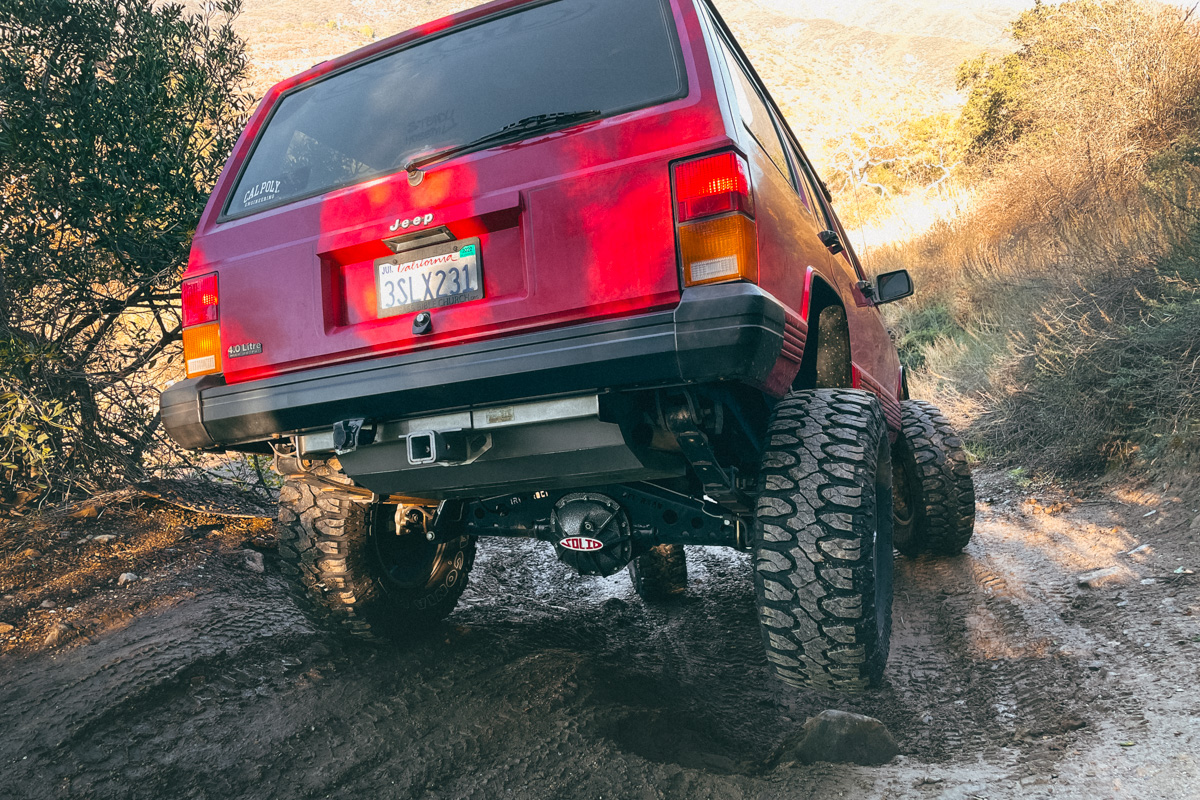
Modified Jeep XJ with custom suspension and off-road components.
Custom solutions expand what's possible:
When customers have unique builds or specific problems that off-the-shelf parts won't solve, having the ability to design custom solutions changes what the shop can offer. CAD and engineering support lets shops leverage their hands-on expertise to develop products instead of just installing them.
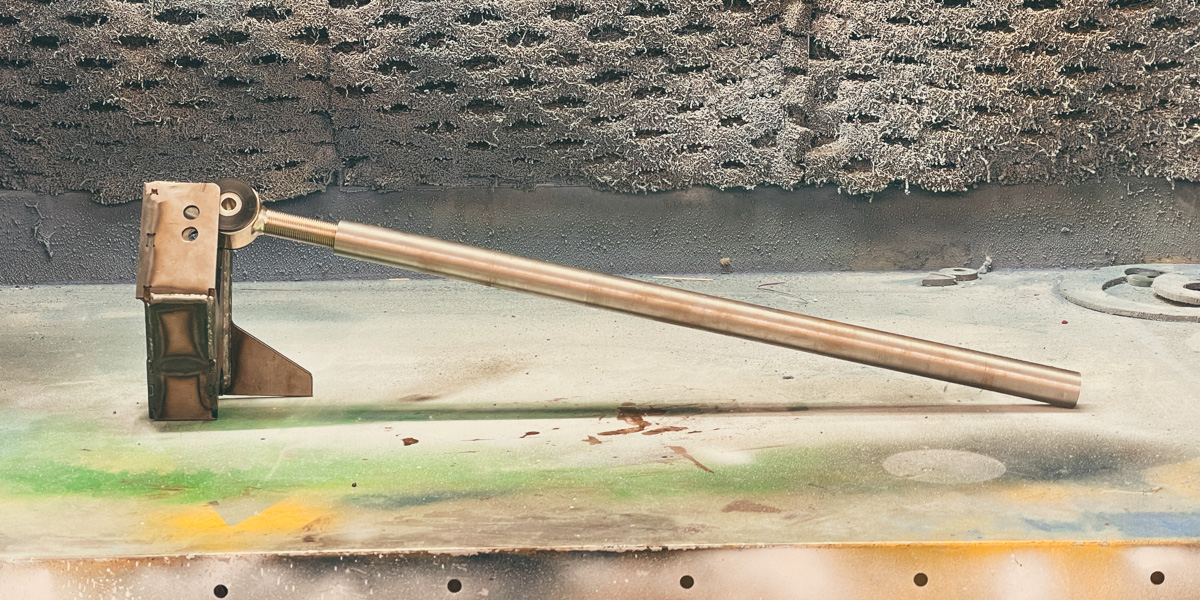
Custom panhard bar and linkage for Jeep XJ front suspension.
Small-batch production is now accessible:
Modern manufacturing services have removed the traditional barriers. Testing ideas doesn't require massive upfront investment or minimum order quantities. Design something, produce a small batch, get real-world feedback, and refine from there. The gap between concept and finished product has collapsed.
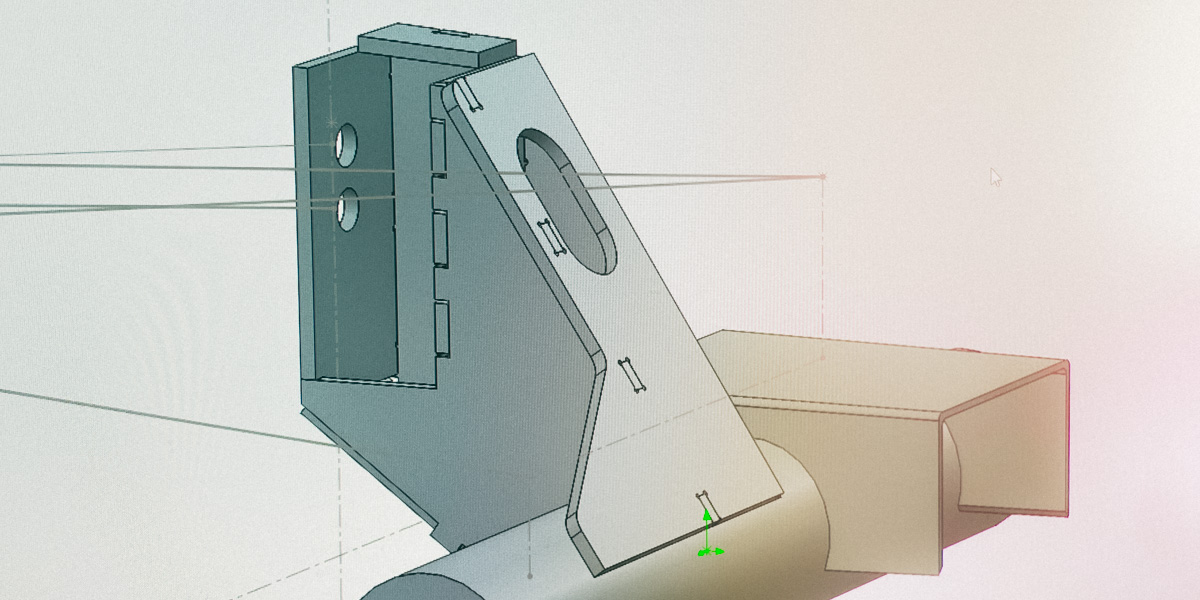
Optimized panhard bar bracket design ready for on-demand manufacturing.
Consumer products succeed or fail based on more than just functionality. A product needs to work well, look appealing, feel right in the hand, and be manufacturable at a price that makes business sense. The market is competitive and customers have high expectations.

Coffee Cactus WDT tool—function and form working together.
Engineering and aesthetics need to work together:
Too often, engineering and industrial design happen separately. The result is products that either look great but are expensive to manufacture, or work well but lack market appeal. When engineering considers aesthetics from the start—surface quality, proportions, how materials feel—products end up better. Complex curved surfaces, smooth transitions, and refined details aren't just about looks; they're about creating products people actually want to use.
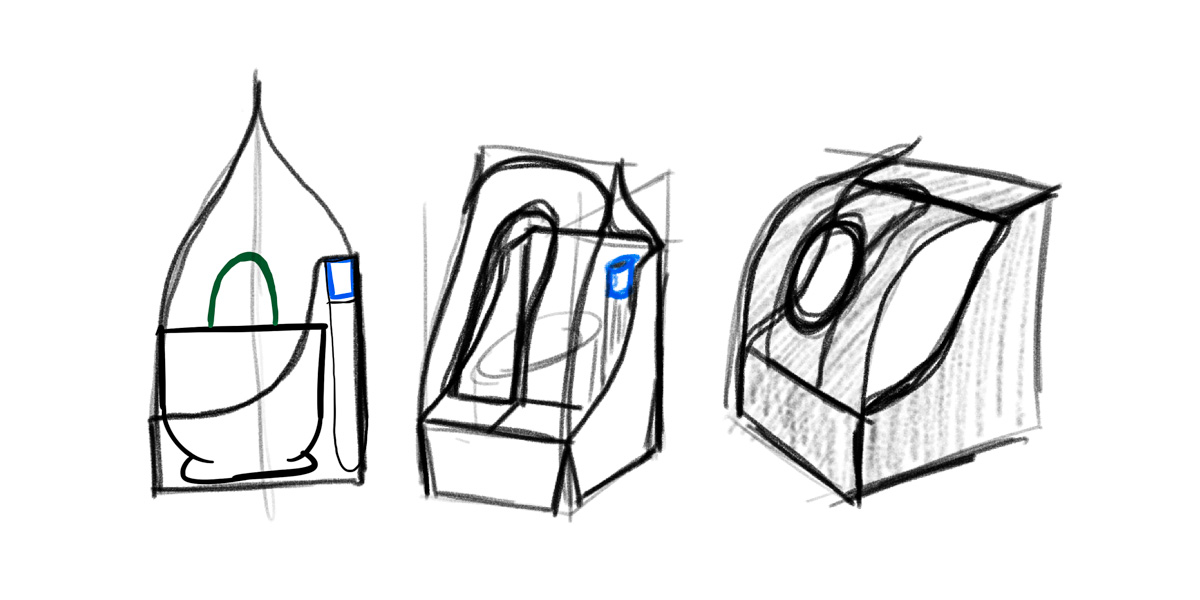
Early design exploration considering both product presentation and manufacturing reality.
Testing before committing to tooling:
Injection molds and hard tooling are expensive. Getting the design wrong means either living with a flawed product or paying for new tooling. 3D printing and CNC machining allow for real prototypes that can be tested with actual users before making costly manufacturing commitments. This validation step can save tens of thousands in tooling revisions.
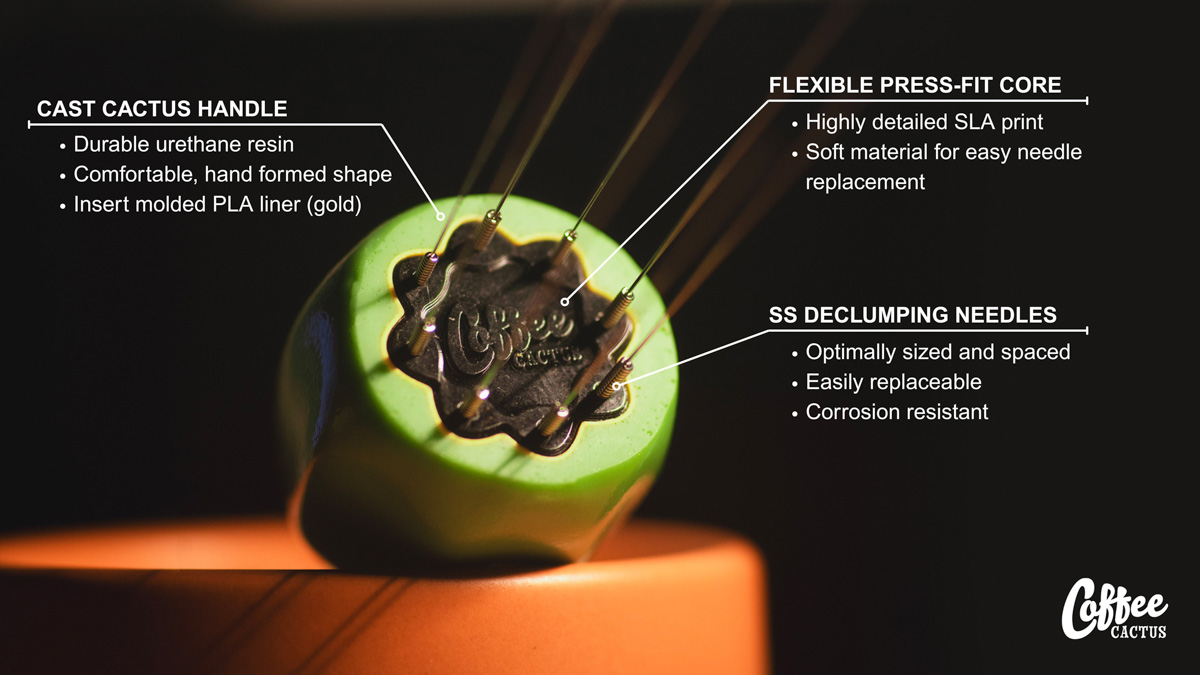
Final product showing attention to surface quality and tactile experience.
Startups operate under constant pressure—limited budgets, tight timelines, and requirements that shift as the business learns what the market actually wants. Speed and flexibility matter more than perfection in early stages.

Early proof-of-concept prototypes
Validate before you scale:
Over-engineering a product before proving demand is a common mistake. The goal early on is learning whether the concept works and whether customers care, not perfecting every detail. Affordable prototyping methods allow startups to test assumptions quickly without burning through runway on tooling and production setup.
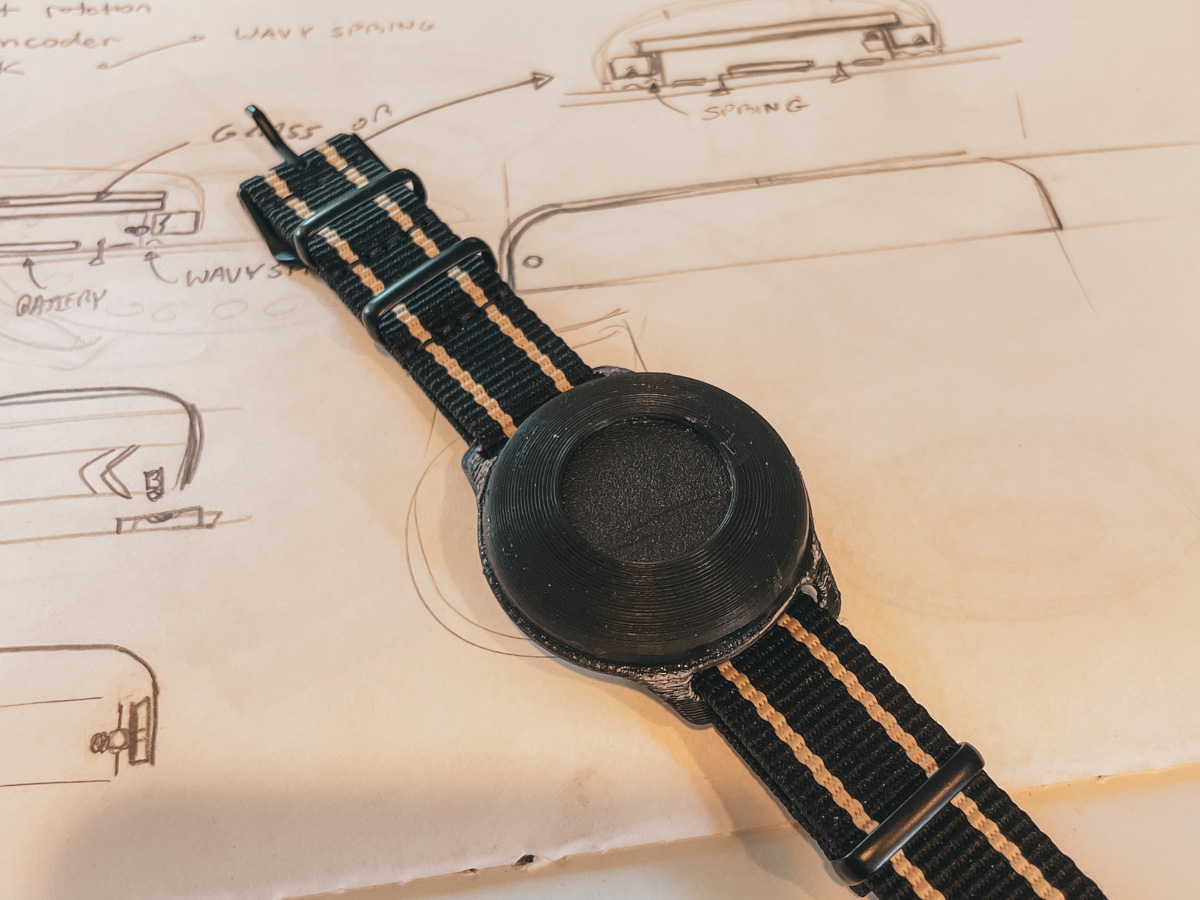
Using 3D printing to visualize product designs early and often.
Fewer partners, faster progress:
Startups benefit from working with people who can handle multiple aspects of development—functional design, visual models for pitch decks, manufacturing-ready CAD files, and photorealistic renders for fundraising materials. Coordinating between separate specialists for each task slows things down and adds communication overhead. A multidisciplinary partner streamlines the process and keeps teams lean.
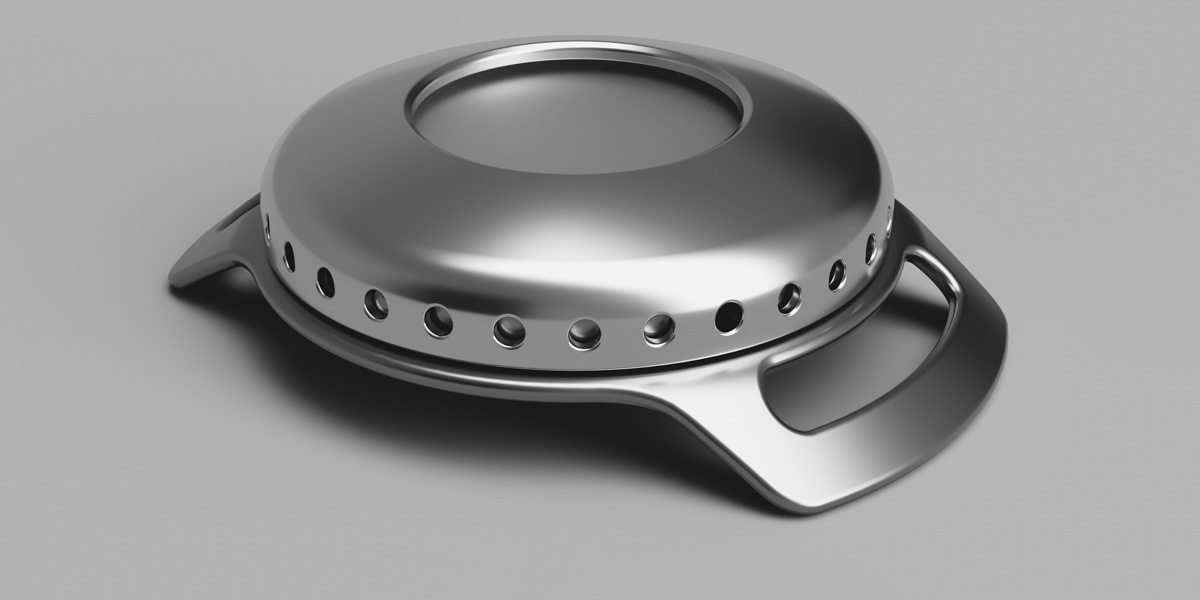
Professional renders ready for use in investor presentations, crowdfunding, or marketing campaigns.
CNC machining has become remarkably accessible. Services like SendCutSend and Xometry allow single-part orders with delivery in days. The barrier isn't access to machines anymore—it's understanding how to design parts that take advantage of what CNC does well.

CNC milling operation on aluminum stock.
What CNC does well:
CNC excels at producing parts with tight tolerances, flat surfaces, and precise hole locations. Parts that benefit from CNC typically need:
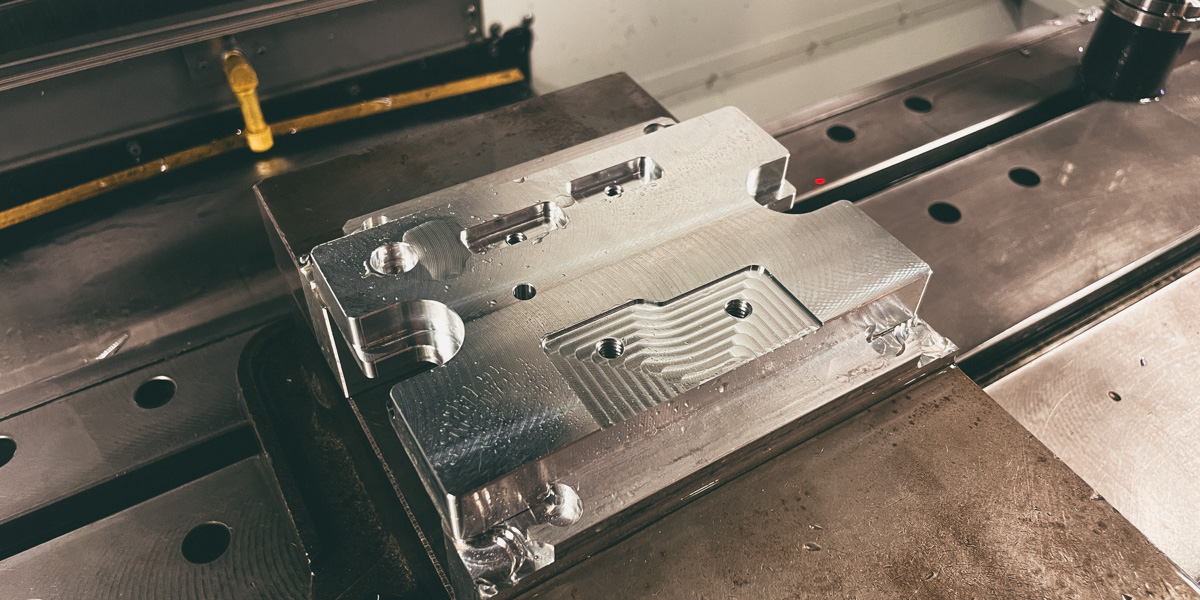
Finished CNC part showing clean surfaces and accurate features.
Design decisions drive cost:
How long a part takes to machine is determined during design, not manufacturing. Minimizing setups, using standard tooling, and specifying tight tolerances only where needed all reduce cost. Working with someone who understands these constraints means parts are designed economically from the start.
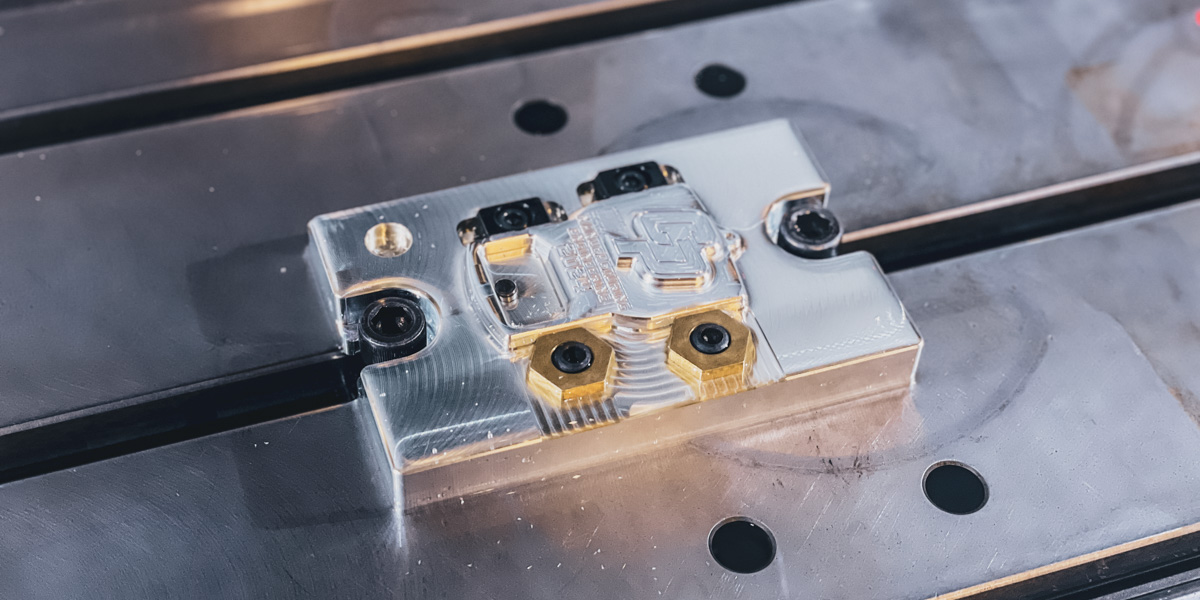
High clearance CNC fixture for accurate and secure machining operations.
3D printing has evolved beyond prototyping. With the right technology and materials, printed parts can be functional components in final assemblies. The key is understanding which printing method suits the application and designing parts that leverage the unique advantages of additive manufacturing.

3D printing quickly produces prototype and production components.
The three main technologies:
FDM (Fused Deposition Modeling) builds parts by melting plastic filament layer by layer. It's fast, affordable, and works with engineering materials like nylon and polycarbonate. FDM is ideal for functional prototypes, jigs, fixtures, and parts that need decent strength without perfect surface finish. When designed with the process in mind, parts can be oriented to maximize strength and minimize or eliminate support structures entirely.
SLA (Stereolithography) uses UV lasers to cure liquid resin. It produces smooth surfaces and fine details that FDM can't match. SLA is the choice for parts requiring tight tolerances, threaded features, or cosmetic quality. The materials are more brittle, but newer formulations offer improved mechanical properties. Thoughtful design and orientation can reduce post-processing work significantly.
SLS (Selective Laser Sintering) fuses nylon powder with a laser to create durable, heat-resistant parts. Loose powder supports the part during printing, enabling complex geometries with no design restrictions on orientation. SLS parts are production-grade and suitable for demanding mechanical applications.
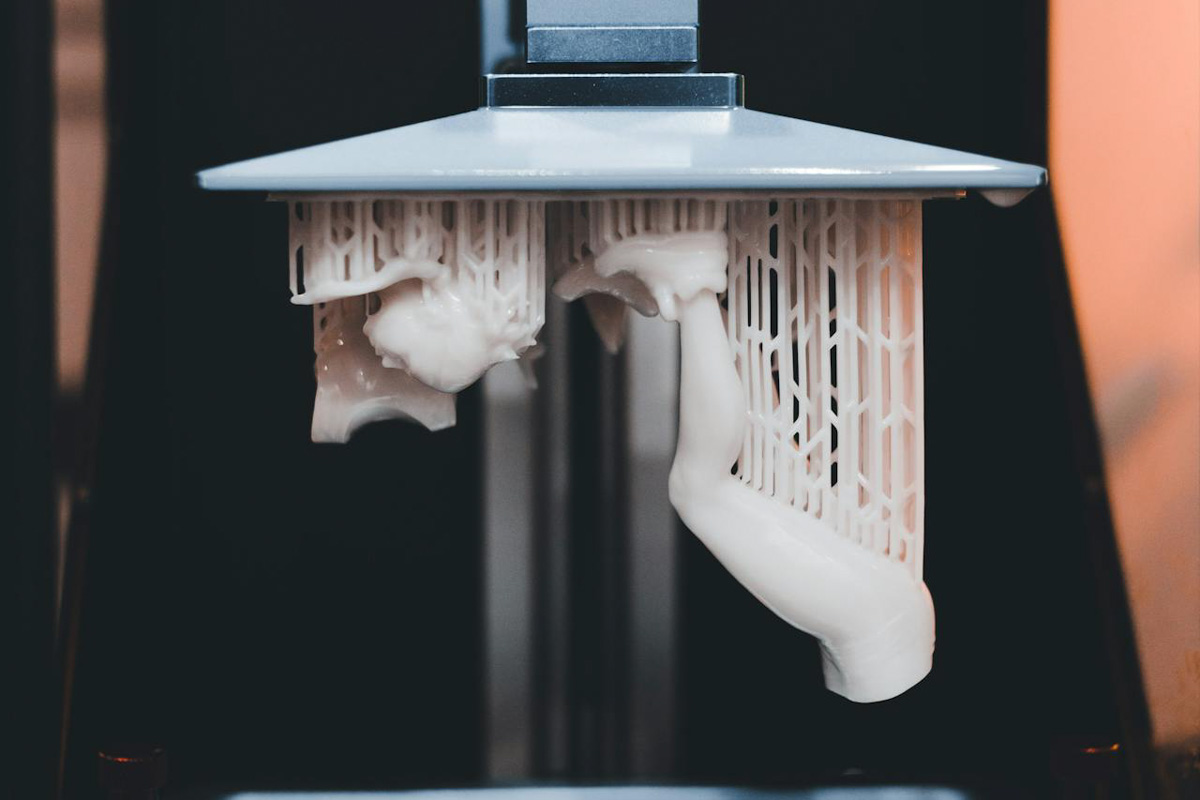
SLA print showing surface quality and detail resolution.
What 3D printing enables:
Complex geometries that would be impossible or expensive to machine become straightforward. Internal channels, organic shapes, and consolidated assemblies are all viable. Parts can be designed specifically for additive manufacturing—using lattice structures for weight reduction, eliminating assembly steps by printing components as one piece, or creating custom jigs and fixtures on demand.
Low volumes make economic sense with 3D printing. Unlike injection molding, which requires expensive tooling that only pays off at high volumes, 3D printing has no setup cost. Producing 10 units costs the same per part as producing one. This makes it valuable for testing components before committing to higher-volume manufacturing methods or for specialized applications where demand is limited.

SLS parts with organic geometry that would be impossible to produce with traditional machining.
3D printing has become a legitimate manufacturing process, not just a prototyping tool. When designed with the process in mind, printed parts can match or exceed traditionally manufactured components while enabling designs that weren't possible before.
Waterjet, plasma, and laser cutting all produce flat components from sheet material, but each process has distinct capabilities. Understanding the differences helps match the right process to the application.
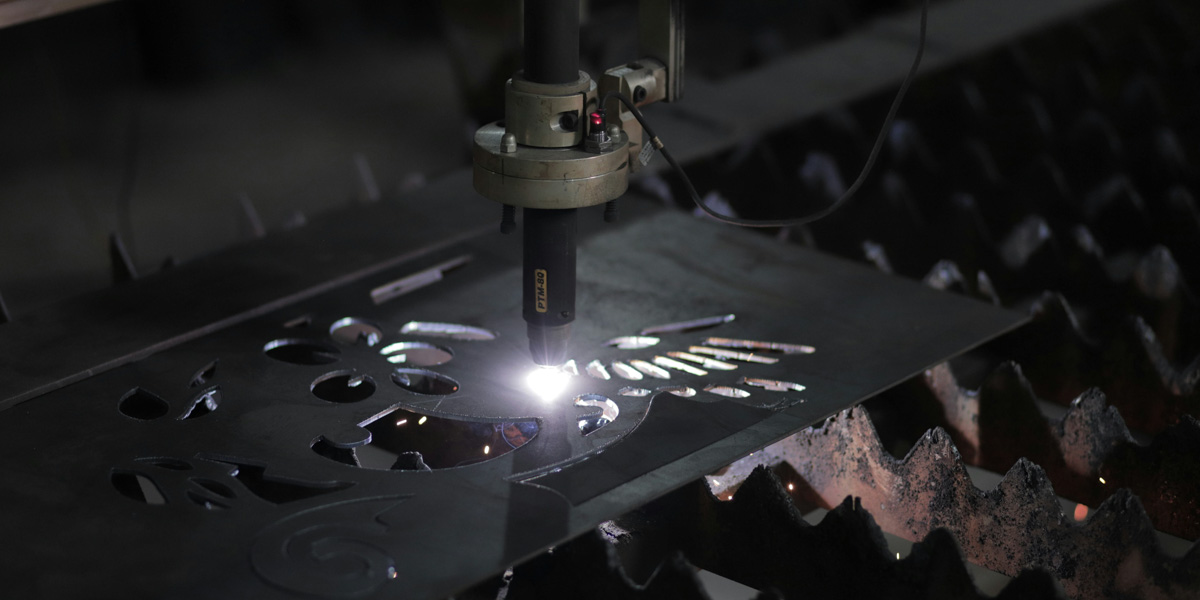
Plasma cutting steel sheet with high precision.
How they compare:
Laser cutting uses a focused beam to melt and vaporize material. It's fast, precise, and produces clean edges. Best for thinner materials—typically up to 1/2" steel or 3/4" aluminum. The heat-affected zone is minimal, but present, which can affect material properties near the cut edge.
Plasma cutting uses electrically ionized gas to cut conductive metals. It handles thicker materials than laser and cuts faster on heavy steel. The heat-affected zone is more pronounced, and edge quality is rougher. Good for structural components where precision isn't critical.
Waterjet cutting uses high-pressure water mixed with abrasive to cut through nearly anything—metals, plastics, glass, stone, composites. It's slower than laser or plasma but has no heat-affected zone and no material limitations. Can handle very thick materials.

Waterjet steel components assembled into rear bumper
What sheet cutting enables:
These processes excel at creating flat components quickly and affordably. Parts can be left as flat plates and brackets, bent into shape using a brake press, or designed with tabs and slots that fit together to construct 3D assemblies. Tab and slot designs create self-fixturing components that hold themselves in position for welding or fastening.
Services like SendCutSend and Xometry have made these processes remarkably accessible. Upload a DXF file, select material and thickness, and receive parts in days. Low quantities are economical—ordering one part or one hundred uses the same process.
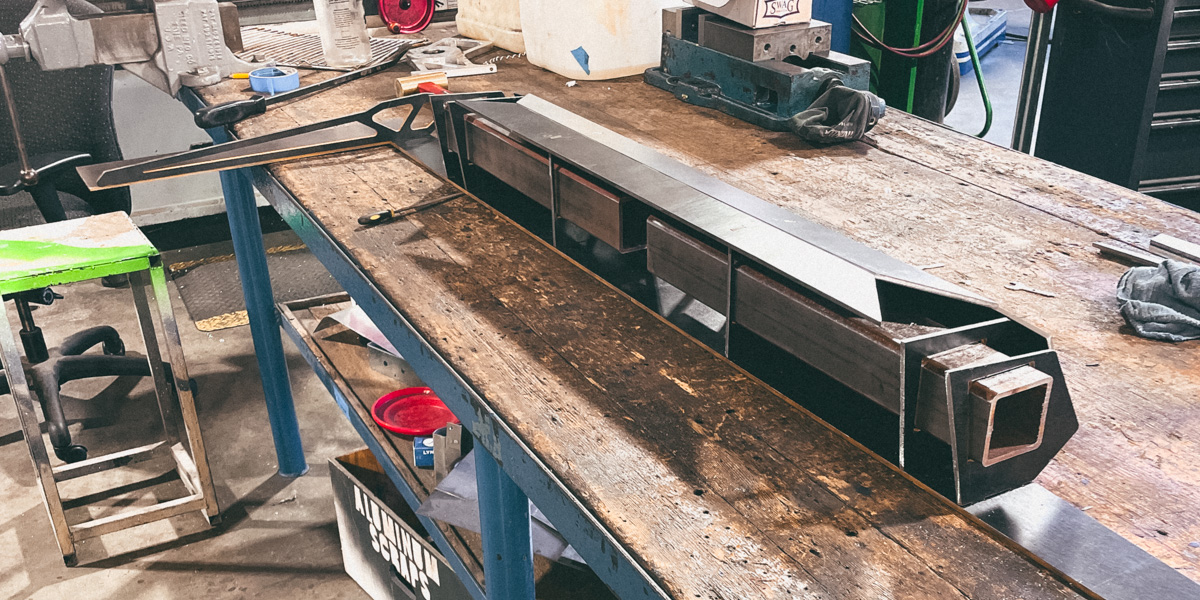
CNC sheet cutting enables complex assemblies to be self-fixturing — reducing fabrication complexity and the need for jigs.
Design considerations are straightforward. Internal corners require additional clearance for the cutting stream width. Efficient nesting of parts on the sheet reduces material waste and cost. When designed with the process in mind, sheet cutting becomes one of the fastest and most cost-effective ways to produce custom metal components.
CAD files unlock on-demand manufacturing—upload a file and receive accurate parts in days. But CAD isn't just about creating shapes in software. It's about making engineering decisions that determine whether a part functions correctly, manufactures economically, and can be revised easily when requirements change.
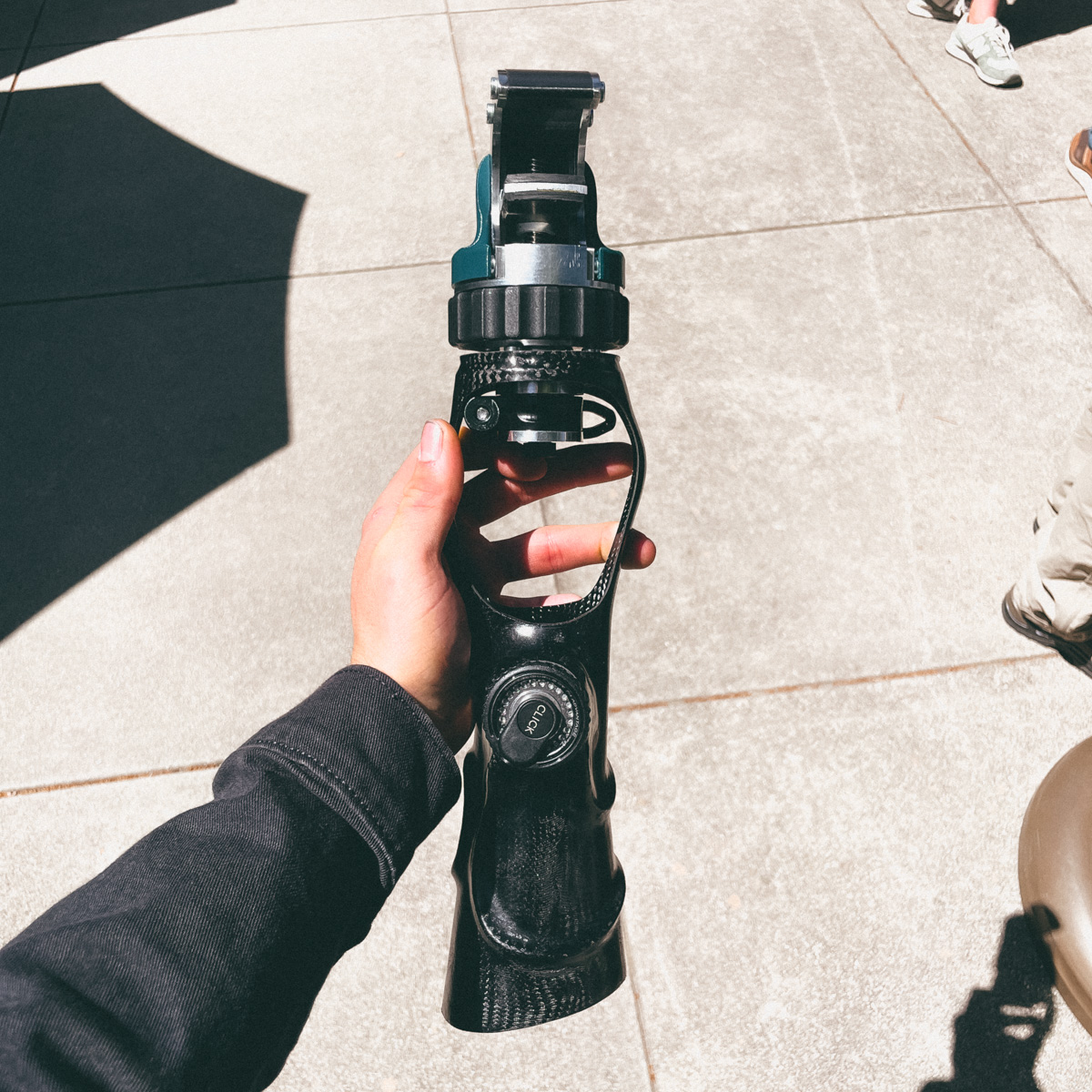
Carbon fiber weightlifting prosthetic designed in CAD software.
Why engineering matters:
Anyone can draw a shape in CAD software. The difference is understanding how that shape will be manufactured, how it fits with other components, where tolerances matter, and what will happen when someone needs to modify it later. These are engineering decisions, not just drafting tasks.
A poorly designed CAD file might look fine but fail during manufacturing—features that can't be machined, tolerances that are impossible to hold, or assemblies that can't actually be put together. Revisions become painful when the model wasn't structured with changes in mind. The design might work on screen but not in the real world.
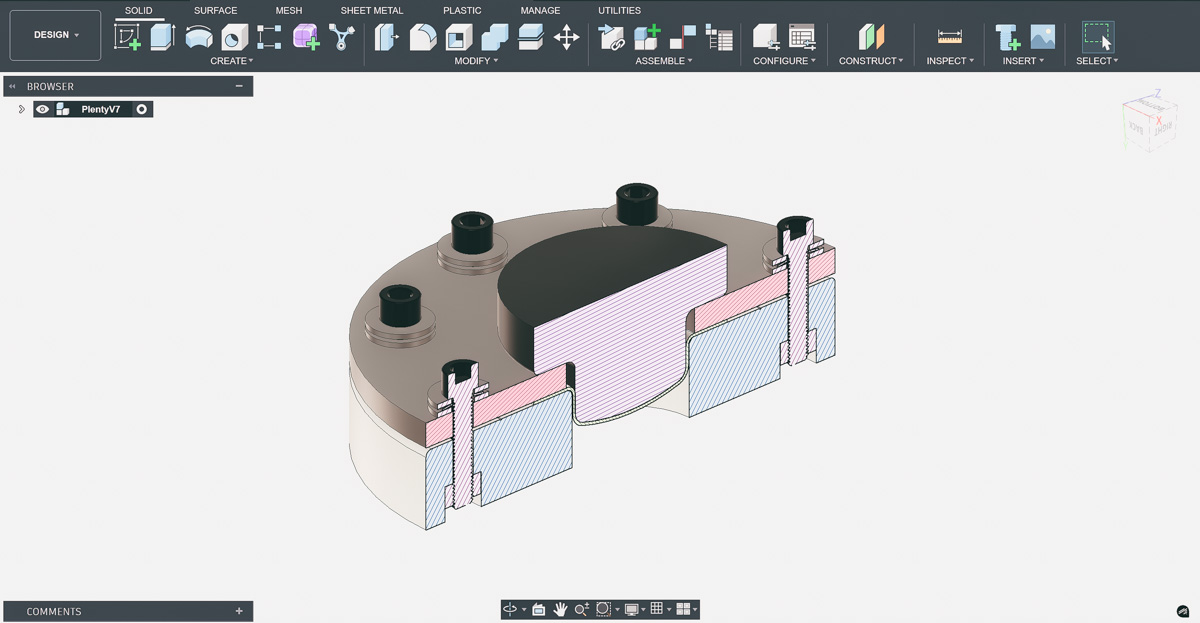
Deep-drawing jig assembly demonstrating manufacturing considerations built into the geometry.
What good CAD enables:
Properly structured CAD files make iteration fast and affordable. Need to change a dimension? The model updates logically. Want to test a different manufacturing process? The file adapts. Ready to order parts? Export the right format and send it.
Files can be shared with any manufacturer—local machine shops, online services, or overseas production facilities. The geometry is unambiguous, the dimensions are precise, and the intent is clear. This is what makes modern on-demand manufacturing possible.
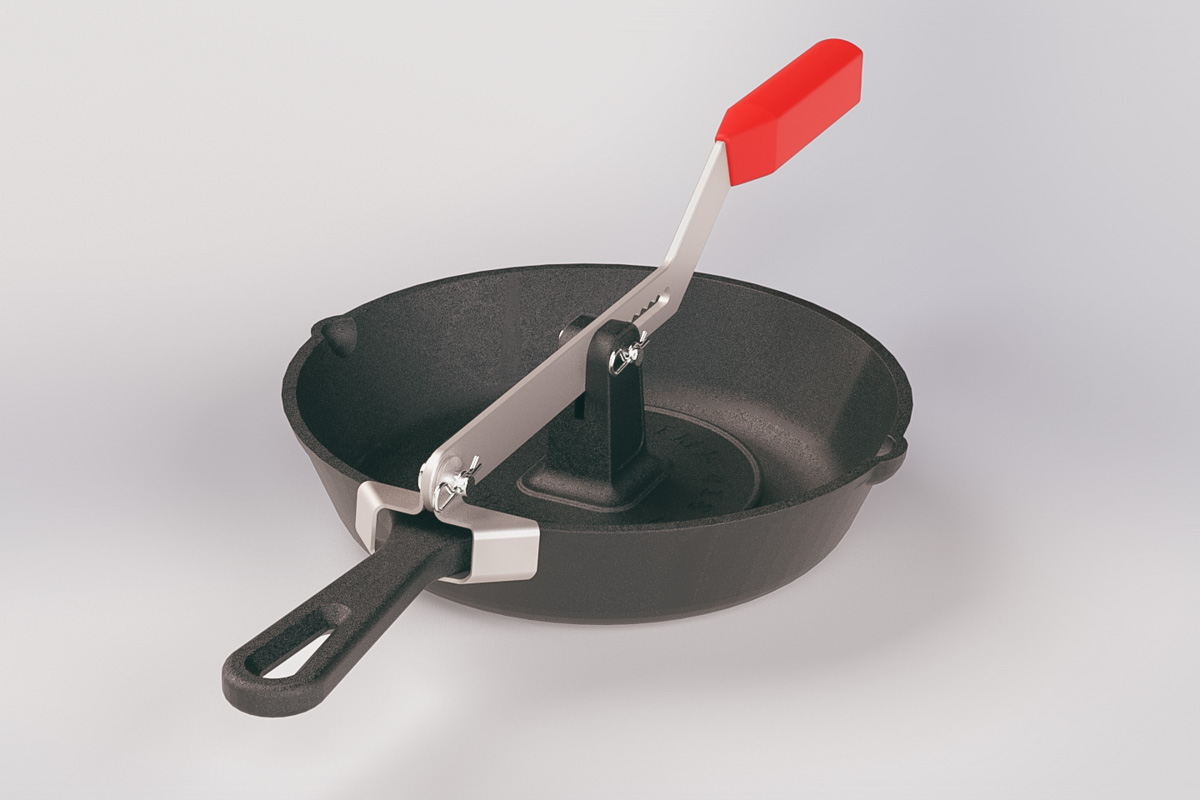
Design decisions, such as material choice and manufacturing process are important to keep in mind during the CAD process.
Good CAD reflects good engineering—thoughtful decisions about materials, processes, assembly, and function. The file is just the output. The value is in the thinking that went into creating it.
Design for Manufacturing (DFM) used to be a separate step after design was complete. With on-demand manufacturing, that approach doesn't work. DFM decisions need to happen from the start because they directly impact cost, lead time, and manufacturability.
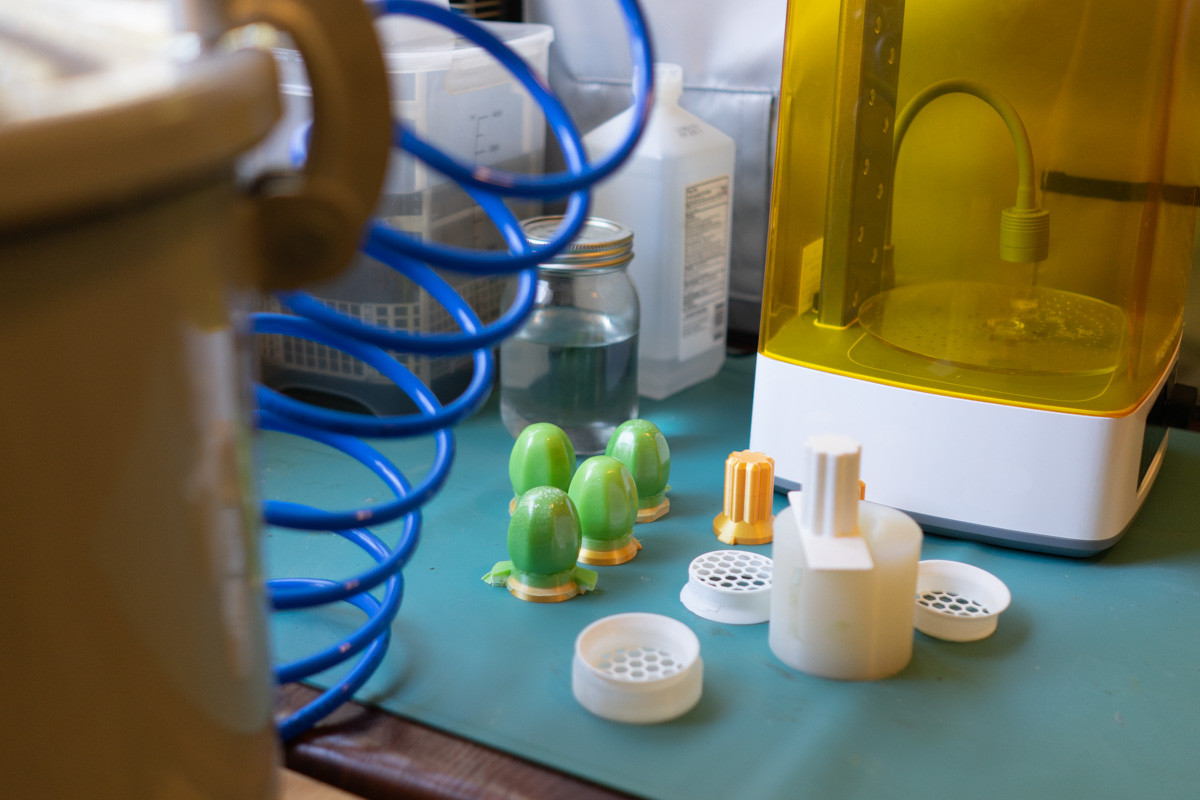
Manufacturing space set up for urethane resin casting and SLA 3D printing.
Making manufacturing work for you:
DFM is about using manufacturing processes to your design advantage. Can this be one part instead of three? Does this tolerance need to be that tight? Will this feature require custom tooling or can standard tools work? These aren't compromises—they're smart choices that achieve the same function more efficiently.
The difference between a part that costs $50 and one that costs $200 is often just a few design decisions made early on. Parts requiring multiple setups, custom fixtures, or secondary operations add cost quickly. Parts designed with process knowledge simply cost less to produce.
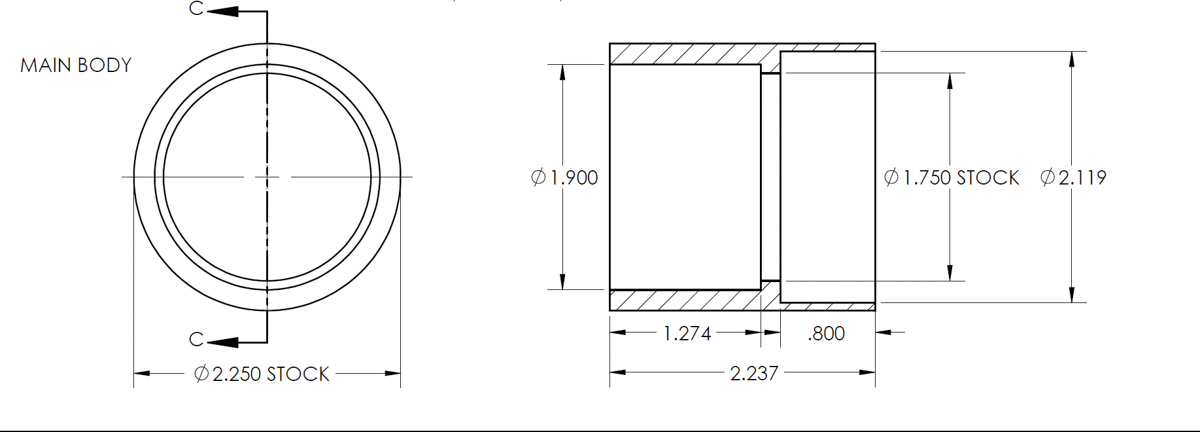
2D drawing ready for machining at a local shop or online service.
Why experience matters:
Understanding what actually happens on the shop floor—proper corner radii, efficient setup orientation, strategic tolerance placement—comes from hands-on work with the processes. This knowledge shows up in designs that manufacturers can build without questions or surprises when quotes come back.

Hands-on experience is the key to designing components that are affordable and reliable to manufacture.
Parts designed right the first time avoid costly redesigns and delays. DFM isn't an afterthought—it's how good parts get designed from the beginning.
Some projects demand specific manufacturing methods based on material properties, performance requirements, or production constraints. The right process depends entirely on what the part needs to do and how it will be made. Having a partner with hands-on experience across a broad range of techniques means more flexibility in finding the right solution.
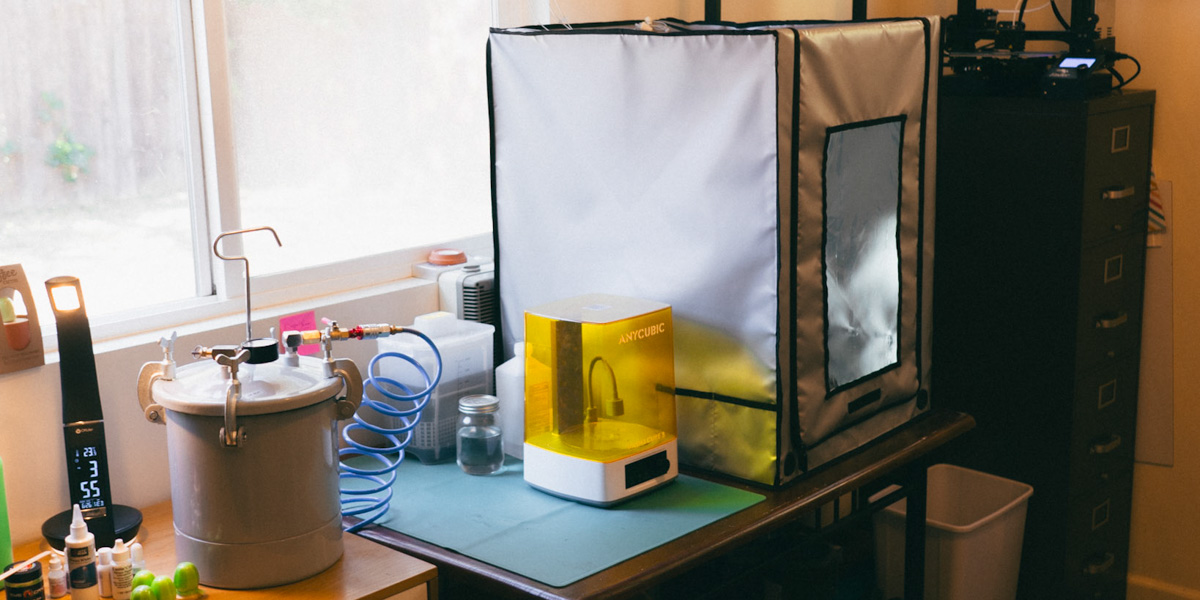
Manufacturing setup with a pressure pot, SLA 3D printer, and curing chamber.
Manufacturing variety:
Different projects require different approaches:
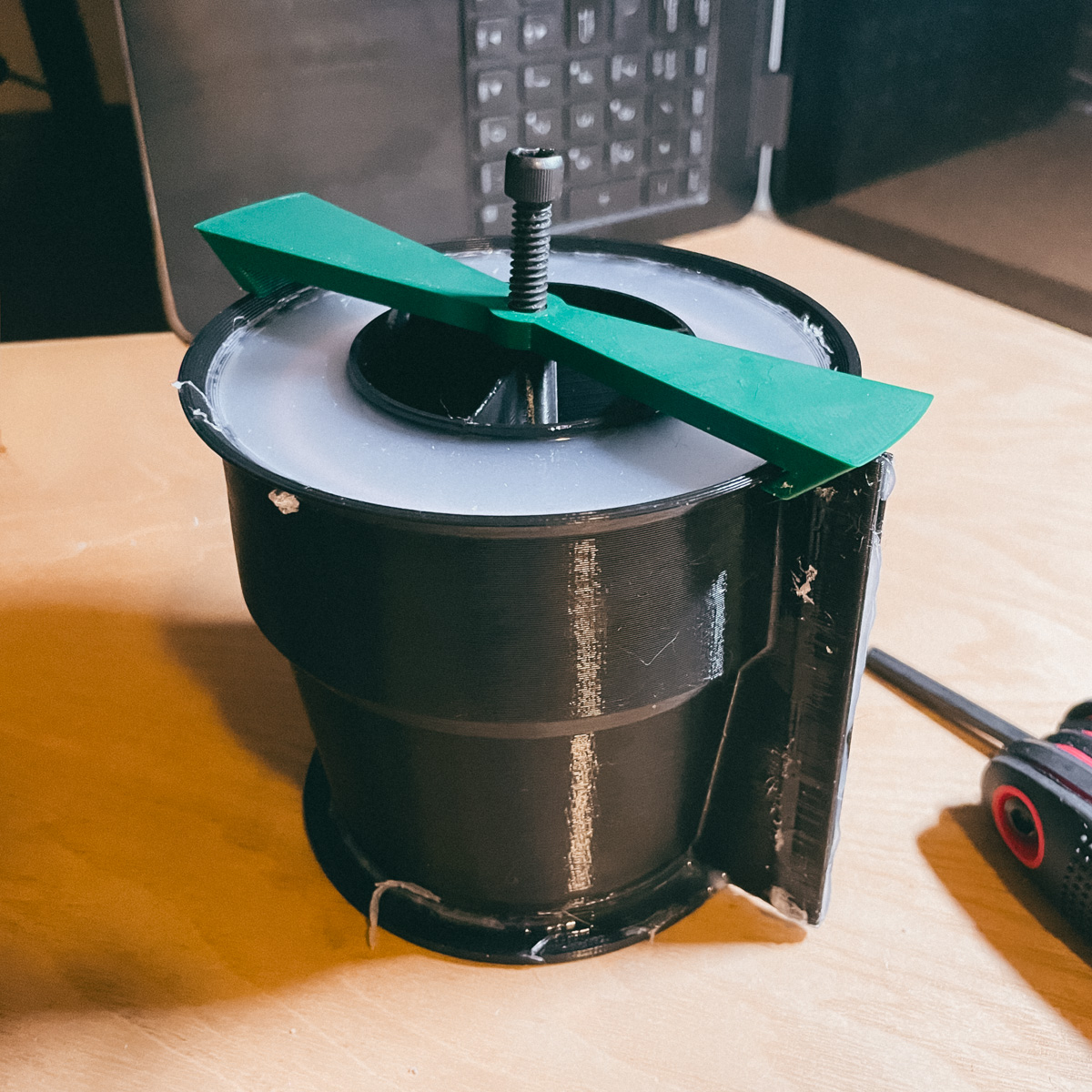
Multi-part silicone mold assembly for concrete casting.
Why breadth matters:
Every project has unique constraints and requirements. Familiarity with a wide range of manufacturing processes means the ability to adapt and find creative solutions. Whether a project needs a specific material, production method, or custom approach, broad hands-on experience makes it possible to deliver results.
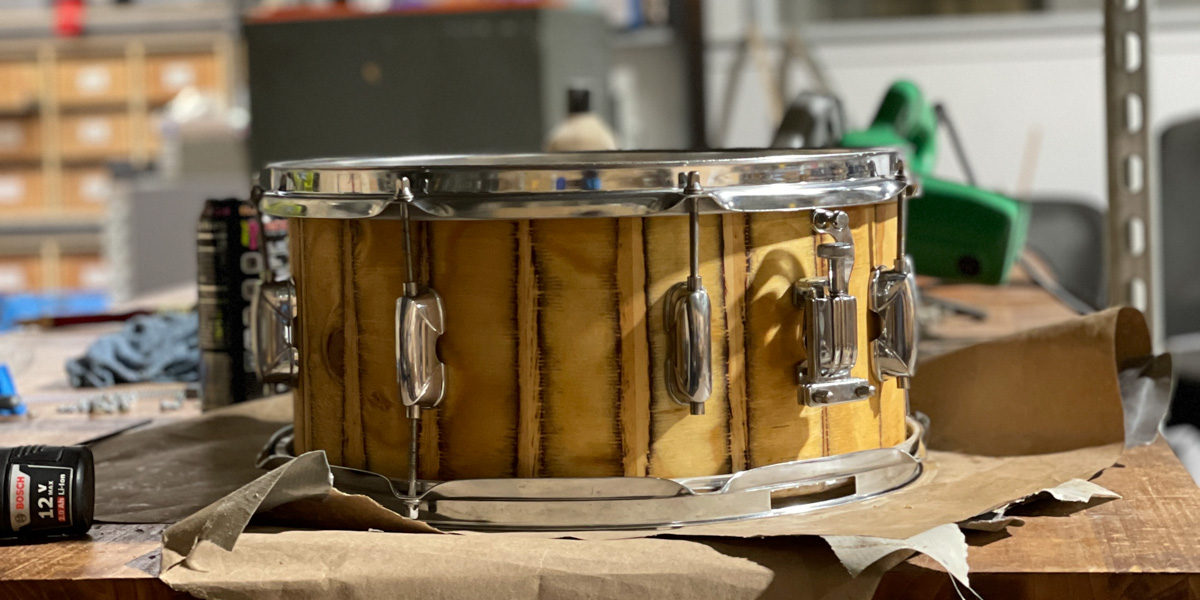
Plywood snare drum constructed using stave method.
Real-world manufacturing experience across diverse processes translates into flexibility when projects demand it.